
Food Business Solutions

How Automation Supports the Upscaling of Food Processing Operations

As demand for ready meals, sauces, and other prepared foods continues to grow, manufacturers are turning to automation in food processing to help scale production while maintaining quality and safety standards. Automation has become a key enabler for producers looking to increase output, improve consistency, and adapt to ever-changing consumer and retailer requirements.

At DC Norris, we work closely with food manufacturers around the world to implement industrial food processing equipment that streamlines operations and supports scalable growth. Below, we explore how automation in the food processing industry is transforming large-scale production.

Automation in Food Processing Boosts Production Efficiency

One of the most immediate benefits of automation is the significant increase in production efficiency. Automated systems manage repetitive tasks with high precision, reducing downtime and eliminating bottlenecks.

For example, integrating slicers, depositors, and topping applicators into a continuous processing line allows manufacturers to handle larger volumes with ease. These systems ensure each product is processed to exact specifications, reducing waste and rework while maintaining consistent quality.

Automation software plays a crucial role. Advanced Recipe Manager Software enables operators to run complex processes with consistency and repeatability. Recipes are pre-programmed and controlled centrally, ensuring each batch is produced to exact parameters, no matter who is operating the line. This eliminates variability and supports efficient scale-up.

Flexible and Scalable Solutions for the Food Processing Industry

Modern automation in the food processing industry is no longer one-size-fits-all. Today’s advanced robotic and control systems are built for flexibility, allowing easy reconfiguration to meet changing production needs.

Whether producing ready meals, sauces, or plant-based alternatives, manufacturers can adapt their systems to different recipes, packaging formats, or portion sizes without extensive manual intervention. This flexibility is essential in sites producing a wide range of products or responding to seasonal demand.

With Recipe Manager Software, operators can switch between validated recipes at the touch of a button. This streamlines changeovers, minimises risk, and ensures full traceability, with every process step securely logged for compliance and quality assurance.

Reducing Labour Costs with Industrial Food Processing Equipment

Ongoing labour shortages and rising wage costs continue to impact food manufacturing worldwide. Industrial food processing equipment provides a practical solution by automating repetitive or physically demanding tasks.

By reducing reliance on manual labour, companies can reallocate their workforce to higher-value roles in quality control, maintenance, and innovation. Automation also simplifies training: with intuitive software, even new operators can produce consistently high-quality results.

Improving Food Safety, Product Consistency and Traceability

Automation in food processing plays a critical role in enhancing food safety, maintaining product consistency, and ensuring traceability. By reducing the reliance on manual intervention, automated systems help minimise the risk of human error, a common cause of contamination, mislabelling, and non-compliance.

Modern automation software can digitally monitor and log key process parameters such as temperature, pressure, and cooking time. These secure records support traceability across every batch and provide valuable data for audits, compliance checks, and quality assurance.

In the event that process conditions deviate from the specified range, alerts can be generated in real time, allowing operators to respond quickly and prevent a compromised product from continuing down the line. When integrated with recipe management systems, this creates a centralised, data-driven environment where consistent product quality is achieved and easily verified — a crucial advantage in high-volume food production.


The Future of Automation in Food Processing

Automation in the food processing industry is no longer a luxury,  it’s a necessity for manufacturers aiming to scale up operations, meet growing demand, and remain competitive. Intelligent, hygienic, and scalable solutions are vital for long-term success.

At DC Norris, we design and manufacture industrial food processing equipment and automation software that help customers around the world scale up with confidence. Whether you’re expanding production or optimising your existing setup, our team is ready to support you at every stage — from trials to installation and beyond. Get in touch with our experienced team today!


The post How Automation Supports the Upscaling of Food Processing Operations appeared first on DC Norris.
Read More

Advantages of AutoCan 1000 Automatic Can Opening & Crushing in High-Volume Food Production Environments

As global demand intensifies for faster, safer, and more sustainable food manufacturing, DC Norris is proud to introduce the AutoCan 1000 — a fully integrated can opener and crusher designed to transform can handling in large-scale food production environments.

More Than a Can Opener — A Complete Waste-Reducing Solution

 Manufactured in the UK, the AutoCan 1000 goes far beyond conventional industrial can openers. This next generation system automates the opening of up to 1,000 cans per hour and performs four critical tasks in a single streamlined process:

  • External rinse to remove debris
  • Precision opening with burr-free, magnetic lid removal
  • Automated emptying, including a jogging system for stubborn contents
  • Internal rinse (optional) to recover residual product
  • Post-use can crushing to minimise volume and optimise recycling

By combining these steps into one compact unit, the AutoCan 1000 helps food manufacturers achieve measurable savings in labour, time, waste disposal costs, and manual handling risks — all while supporting corporate sustainability goals through improved recycling efficiency.

Meeting the Needs of Modern Production Environments

In commercial kitchens, central production units, and high-volume factories, can handling is traditionally a repetitive and labour-intensive process prone to hygiene issues and inconsistencies. The AutoCan 1000 eliminates these inefficiencies with:

  • Automatic height adjustment for varied can sizes and different products
  • Tool-free cutting head change for maximum flexibility
  • Fully enclosed operation for enhanced safety and hygiene
  • Minimal operator input, freeing staff for higher-value tasks

Built-In Hygiene and Low-Maintenance Design

Safety is engineered into every element of the AutoCan 1000. The unit operates fully enclosed to eliminate blade exposure and contact with sharp edges, while automatic ejection and transfer of cans between stages reduces manual handling. Combined with its hygienic stainless-steel construction and sealed motor, the system supports clean, safe operation in even the most demanding environments.

Supporting Circular Economy Goals

One of the AutoCan 1000’s key advantages lies in its waste reduction capabilities. By crushing cans post-emptying, the system reduces waste volume at the source, making on-site recycling easier, more cost-effective, and environmentally responsible. This supports processors in their efforts to reduce their carbon footprint and comply with tightening regulations around packaging and waste.

Scalable, Sustainable, and Built for Performance

Whether you’re producing soups, ready meals, or pet food, the AutoCan 1000 is a scalable, future-ready solution that delivers long-term performance. From increasing throughput to reducing waste and enhancing workplace safety, it provides genuine operational and environmental benefits for modern food manufacturers.

Discover how the AutoCan 1000 can improve your production efficiency and sustainability targets. Contact DC Norris today or visit our website to arrange a demonstration.


The post Advantages of AutoCan 1000 Automatic Can Opening & Crushing in High-Volume Food Production Environments appeared first on DC Norris.

Read More

Product Spotlight: DC Norris Manual Bag Emptier – Proven Performance, Maximum Yield

At DC Norris, we engineer solutions that deliver real-world results. Our Manual Bag Emptier / Scraper stands out as a high-performance solution specifically designed for the efficient and hygienic emptying of chilled product bags—even with varying viscosity.

Proven Performance – Backed by Data

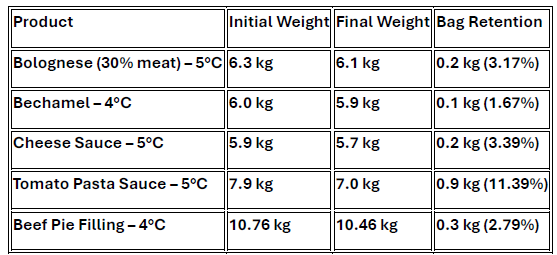
In recent trials involving chilled products with viscosities from 500Cp to 17,000Cp, our solution achieved a bag retention as low as 0.1 – 0.2 kg per bag, equating to less than 1.5% product loss in most cases.

Here’s a snapshot of our test results:

Engineered for Precision & Hygiene

Featuring integrated roller blade, the system ensures smooth product transfer with minimal manual effort. Its design supports chilled operations (4°C to 5°C), making it ideal for handling high-viscosity products like sauces, dairy-based mixtures, and pie fillings.

✅ Key Benefits:

  • Efficient removal of high-viscosity and chilled food products.
  • Reduces product wastage to less than 1.5% (product specific), ensuring maximum yield.
  • Roller blade technology for hygienic and thorough scraping.
  • Built with DC Norris’ renowned hygienic stainless-steel design.

Ready to Improve Your Production Efficiency?
The Manual Bag Emptier / Scraper is the smart choice for food processors looking to minimise waste and improve throughput.

To learn more about how our Manual Bag Emptier can benefit your business, or to request a demonstration, contact DC Norris today.


The post Product Spotlight: DC Norris Manual Bag Emptier – Proven Performance, Maximum Yield appeared first on DC Norris.

Read More

Selecting a Food Production Line for Rice, Pasta, and Pulses: What You Need to Know

In the food production industry, the right equipment can make the difference between a high-quality, efficient operation and one that struggles with product loss, inefficiency, or inconsistent results. When it comes to designing a food production line for rice, pasta, and pulses, it’s important to recognise that each product comes with its own set of challenges and requirements.

Below, we explore the key considerations — and how DC Norris’s expertise and advanced equipment for the food production industry can help you get it right.

1. Tailor Your Line to Product Characteristics

Rice, pasta, and pulses vary in fragility, density, composition and moisture sensitivity. These properties influence how they should be stored, conveyed, and handled. For example:

  • Dried Pasta can be prone to breakage if transferred too roughly.
  • Rice requires precise control to prevent clumping, breaking or overcooking.
  • Pulses may need careful moisture hydration management to maintain texture.

A one-size-fits-all approach risks product damage and inefficiency. Instead, your production line should be engineered to accommodate the specific characteristics of each ingredient.

2. Use Advanced Cook Quench Chill Systems for Optimal Texture

DC Norris’ Cook Quench Chill systems are purpose-built to cook and cool products like rice, pasta, and pulses efficiently and gently. Features such as wave agitation, rapid heating  and precise temperature control help long pasta, noodles, and delicate rice grains maintain definition without sticking or breaking. Pulses are cooked evenly while preserving their shape and texture.

By optimising each stage — cooking, quenching, and chilling — Cook Quench Chill systems deliver a consistent, high-quality result every time.

3. Select a Line That Can Adapt to Your Future Needs

Investing in a food production line is a long-term decision, and flexibility is key to maximising your return on investment. DC Norris’s Cook Quench Chill Adapt system is modular by design, allowing you to add sections or upgrade components as your production requirements evolve.

This means you can:

  • Increase throughput by adding extra cooking, quenching, or chilling modules
  • Change processes to suit new products, either fresh or dried
  • Scale up capacity without replacing the entire line

A modular approach ensures your equipment can grow with your business, helping you adapt to changing market demands without significant downtime or capital expense.

4. Incorporate Energy-Efficient Technologies

Energy consumption is a growing concern in the food production industry. DC Norris addresses this with innovations like Jet Cook™, which uses advanced steam technology to heat products quickly and evenly. Compared to traditional methods, Jet Cook can reduce energy usage by up to 50%, cutting operating costs while supporting sustainability goals.

5. Implement Automated Process Management for Consistency

Maintaining batch-to-batch consistency is essential in large-scale production. DC Norris’ Process Manager Software provides precise control over cooking parameters — such as temperature, agitation, and cook times — ensuring every batch meets exact specifications. This not only safeguards product quality but also simplifies operator training and reduces the chance of human error.

6. Design for Flexibility to Meet Market Demands

Today’s manufacturers often need to process a variety of products on the same line. DC Norris’s systems are designed for versatility, capable of handling:

  • Long and short pasta shapes, fresh or dried
  • White, brown, and speciality rice
  • Pulses such as lentils, beans, and chickpeas
  • Alternative grains and even sliced vegetables

This adaptability allows producers to respond to evolving market trends without investing in separate production lines for each product.

In summary, selecting the right food production line for rice, pasta, and pulses means taking into account the specific characteristics of each product, integrating advanced cooking and cooling technologies, prioritising energy efficiency, and ensuring flexibility for future growth. With decades of expertise and cutting-edge equipment for the food production industry, DC Norris helps manufacturers around the world achieve consistent quality, reduced costs, and greater operational efficiency.

Ready to Build Your Ideal Food Production Line?

Whether you’re producing delicate pasta, premium rice, or protein-rich pulses, DC Norris can design a solution tailored to your needs — now and in the future.

📞 Call us today on +44 (0) 1763 245 611 or
📧 Email us at info@dcnorris.com to discuss your project with one of our experts.

The post Selecting a Food Production Line for Rice, Pasta, and Pulses: What You Need to Know appeared first on DC Norris.
Read More

DC Norris Group Announces Landmark Project in North America, Showcasing Streamlined Global Approach

We are pleased to announce that our North American division has secured one of the largest projects in its ten-year history. This milestone marks the first installation to move forward under our newly streamlined delivery model, reflecting the growing demand for a more coordinated approach to sourcing and installing food processing equipment across multiple brands and applications.

Our centralised model gives manufacturers in the United States and Canada direct access to an expanded equipment portfolio manufactured within the DC Norris Group of companies. This includes world-class food processing systems from DC Norris (UK), BCH, Gilwood, and AE Mixers. By acting as a single point of contact, DC Norris North America ensures clients benefit from integrated engineering, shorter project timelines, and consistent support from planning through to commissioning.

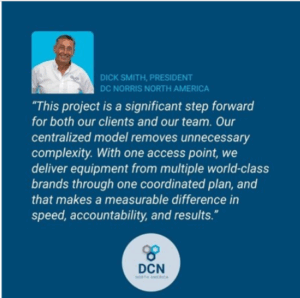
“This project represents an important step for our global operations,” said Dick Smith, President of DC Norris North America. “The centralised model being implemented in North America highlights how our Group can simplify project delivery, reduce complexity for customers, and provide a seamless service, no matter where they are in the world.”DC Norris North America 's Dick Smith

Key benefits of our centralised access model include:

  • Integrated system design that minimises compatibility issues and ensures reliable start-up

  • Single accountability for project delivery, training, and performance

  • Accelerated installation and commissioning with unified support

  • US based service engineers supported by a robust domestic spare parts inventory, with direct access to additional stock held in the UK

  • Ongoing collaboration with the original equipment manufacturers for long-term operational efficiency

This landmark project sets a new benchmark for the DC Norris Group and demonstrates the strength of our global approach to equipment supply and project execution.

DC Norris North America will be exhibiting at Pack Expo Las Vegas, September 29 through October 1, 2025 in booth N-6862 where attendees will experience all four portfolio brands showcased. Company leadership and sales engineers will be on hand to discuss equipment applications with manufacturers and take media interviews at the Las Vegas show.

If you would like to learn more about our collaborative projects or discuss how we can support your next installation, please contact us

Pack Expo

The post DC Norris Group Announces Landmark Project in North America, Showcasing Streamlined Global Approach appeared first on DC Norris.

Read More

How Advanced Industrial Equipment Is Transforming Beverage Manufacturing

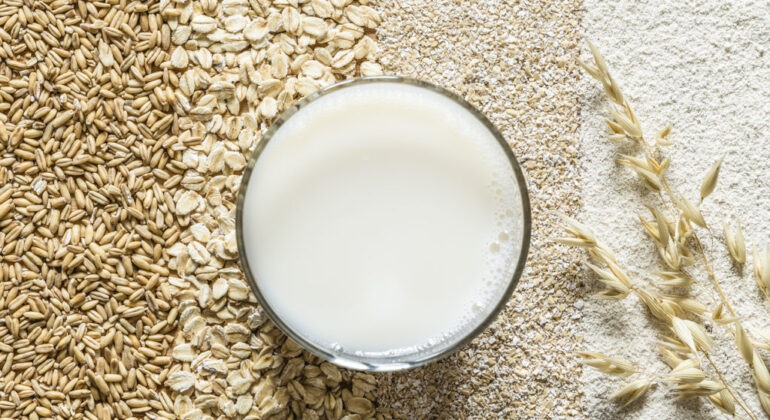
Beverage manufacturing equipment used to create oat milk.

The beverage manufacturing industry is evolving rapidly as food and beverage manufacturers strive to meet growing consumer demand for quality, variety, and sustainability. At the heart of this transformation is a new generation of beverage manufacturing equipment designed to streamline production, ensure consistency, improve product flexibility, and reduce environmental impact.

At DC Norris, we work closely with customers across the globe to optimise their beverage processes. From fruit juices, grain-based nutrition drinks, and plant-based milks to energy drinks and syrups, our advanced systems support every step of production. Here’s how innovation is reshaping the future of beverage manufacturing:

Enhanced Automation for Efficiency

Modern beverage manufacturing equipment incorporates automation technologies such as robotics, AI, and real-time monitoring. These advancements significantly reduce manual intervention, helping manufacturers to:

  • Increase throughput without compromising product quality
  • Reduce downtime through predictive maintenance and system alerts
  • Achieve greater consistency and repeatability from batch to batch

Automated systems and process driven software can be integrated across the production line – from mixing and heating to filling and cleaning – creating a seamless and efficient operation.

Improved Quality Control and Consistency

Maintaining product consistency is crucial in the food and beverage manufacturing sector. Advanced machinery features sophisticated sensors and precision controls that regulate temperature, pressure, mixing speed, and other key parameters. This ensures:

  • Uniform flavour and texture across every batch
  • High standards in packaging and labelling

Our Jet Process and other in-line systems allow for consistent results while also reducing processing time and footprint.

Sustainability and Energy Efficiency

Sustainability is no longer optional – it’s a priority. Forward-thinking manufacturers are investing in equipment that supports environmentally responsible production. Advanced systems now offer:

  • Reduced energy consumption through efficient heat transfer
  • Lower water usage during processing and cleaning
  • Minimised waste generation

At DC Norris, we help customers meet their environmental targets with equipment that combines performance with responsible resource management.

Flexible Production Capabilities

 Consumer preferences change quickly. Modern beverage manufacturing equipment allows producers to adapt just as fast. Today’s systems are designed for:

  • Rapid changeovers between products or flavours
  • Scalable batch sizes to suit demand
  • Integration with custom recipes
  • Flexibility to use new ingredients with existing systems

 This flexibility is key to staying competitive in an increasingly diverse marketplace.

The Next Step for Beverage Manufacturers

 The beverage manufacturing industry is being transformed by innovative technologies that improve efficiency, quality, sustainability, and flexibility. Whether you’re producing plant-based drinks, ready-to-drink teas, or functional beverages, investing in the right equipment is essential for long-term success.

At DC Norris, we supply world-class processing systems tailored to the needs of food and beverage manufacturers. Contact our team to learn how we can help you modernise your production and stay ahead of the curve.


The post How Advanced Industrial Equipment Is Transforming Beverage Manufacturing appeared first on DC Norris.

Read More

Selecting a Food Production Line for Rice, Pasta, and Pulses: What You Need to Know

In the food production industry, the right equipment can make the difference between a high-quality, efficient operation and one that struggles with product loss, inefficiency, or inconsistent results. When it comes to designing a food production line for rice, pasta, and pulses, it’s important to recognise that each product comes with its own set of challenges and requirements.

Below, we explore the key considerations — and how DC Norris’s expertise and advanced equipment for the food production industry can help you get it right.

1. Tailor Your Line to Product Characteristics

Rice, pasta, and pulses vary in fragility, density, composition and moisture sensitivity. These properties influence how they should be stored, conveyed, and handled. For example:

  • Dried Pasta can be prone to breakage if transferred too roughly.
  • Rice requires precise control to prevent clumping, breaking or overcooking.
  • Pulses may need careful moisture hydration management to maintain texture.

A one-size-fits-all approach risks product damage and inefficiency. Instead, your production line should be engineered to accommodate the specific characteristics of each ingredient.

2. Use Advanced Cook Quench Chill Systems for Optimal Texture

DC Norris’ Cook Quench Chill systems are purpose-built to cook and cool products like rice, pasta, and pulses efficiently and gently. Features such as wave agitation, rapid heating  and precise temperature control help long pasta, noodles, and delicate rice grains maintain definition without sticking or breaking. Pulses are cooked evenly while preserving their shape and texture.

By optimising each stage — cooking, quenching, and chilling — Cook Quench Chill systems deliver a consistent, high-quality result every time.

3. Select a Line That Can Adapt to Your Future Needs

Investing in a food production line is a long-term decision, and flexibility is key to maximising your return on investment. DC Norris’s Cook Quench Chill Adapt system is modular by design, allowing you to add sections or upgrade components as your production requirements evolve.

This means you can:

  • Increase throughput by adding extra cooking, quenching, or chilling modules
  • Change processes to suit new products, either fresh or dried
  • Scale up capacity without replacing the entire line

A modular approach ensures your equipment can grow with your business, helping you adapt to changing market demands without significant downtime or capital expense.

4. Incorporate Energy-Efficient Technologies

Energy consumption is a growing concern in the food production industry. DC Norris addresses this with innovations like Jet Cook™, which uses advanced steam technology to heat products quickly and evenly. Compared to traditional methods, Jet Cook can reduce energy usage by up to 50%, cutting operating costs while supporting sustainability goals.

5. Implement Automated Process Management for Consistency

Maintaining batch-to-batch consistency is essential in large-scale production. DC Norris’ Process Manager Software provides precise control over cooking parameters — such as temperature, agitation, and cook times — ensuring every batch meets exact specifications. This not only safeguards product quality but also simplifies operator training and reduces the chance of human error.

6. Design for Flexibility to Meet Market Demands

Today’s manufacturers often need to process a variety of products on the same line. DC Norris’s systems are designed for versatility, capable of handling:

  • Long and short pasta shapes, fresh or dried
  • White, brown, and speciality rice
  • Pulses such as lentils, beans, and chickpeas
  • Alternative grains and even sliced vegetables

This adaptability allows producers to respond to evolving market trends without investing in separate production lines for each product.

In summary, selecting the right food production line for rice, pasta, and pulses means taking into account the specific characteristics of each product, integrating advanced cooking and cooling technologies, prioritising energy efficiency, and ensuring flexibility for future growth. With decades of expertise and cutting-edge equipment for the food production industry, DC Norris helps manufacturers around the world achieve consistent quality, reduced costs, and greater operational efficiency.

Ready to Build Your Ideal Food Production Line?

Whether you’re producing delicate pasta, premium rice, or protein-rich pulses, DC Norris can design a solution tailored to your needs — now and in the future.

📞 Call us today on +44 (0) 1763 245 611 or
📧 Email us at info@dcnorris.com to discuss your project with one of our experts.

V1-JDRGroup-DC Norris – CTAs -735 x 268 px-DD-14Jan2025-01

The post Selecting a Food Production Line for Rice, Pasta, and Pulses: What You Need to Know appeared first on DC Norris.

Read More

DC Norris Group Announces Landmark Project in North America, Showcasing Streamlined Global Approach

We are pleased to announce that our North American division has secured one of the largest projects in its ten-year history. This milestone marks the first installation to move forward under our newly streamlined delivery model, reflecting the growing demand for a more coordinated approach to sourcing and installing food processing equipment across multiple brands and applications.

Our centralised model gives manufacturers in the United States and Canada direct access to an expanded equipment portfolio manufactured within the DC Norris Group of companies. This includes world-class food processing systems from DC Norris (UK), BCH, Gilwood, and AE Mixers. By acting as a single point of contact, DC Norris North America ensures clients benefit from integrated engineering, shorter project timelines, and consistent support from planning through to commissioning.

“This project represents an important step for our global operations,” said Dick Smith, President of DC Norris North America. “The centralised model being implemented in North America highlights how our Group can simplify project delivery, reduce complexity for customers, and provide a seamless service, no matter where they are in the world.”DC Norris North America 's Dick Smith

Key benefits of our centralised access model include:

  • Integrated system design that minimises compatibility issues and ensures reliable start-up

  • Single accountability for project delivery, training, and performance

  • Accelerated installation and commissioning with unified support

  • US based service engineers supported by a robust domestic spare parts inventory, with direct access to additional stock held in the UK

  • Ongoing collaboration with the original equipment manufacturers for long-term operational efficiency

This landmark project sets a new benchmark for the DC Norris Group and demonstrates the strength of our global approach to equipment supply and project execution.

DC Norris North America will be exhibiting at Pack Expo Las Vegas, September 29 through October 1, 2025 in booth N-6862 where attendees will experience all four portfolio brands showcased. Company leadership and sales engineers will be on hand to discuss equipment applications with manufacturers and take media interviews at the Las Vegas show.

If you would like to learn more about our collaborative projects or discuss how we can support your next installation, please contact us

Pack Expo

The post DC Norris Group Announces Landmark Project in North America, Showcasing Streamlined Global Approach appeared first on DC Norris.

Read More

How Advanced Industrial Equipment Is Transforming Beverage Manufacturing

Beverage manufacturing equipment used to create oat milk.

The beverage manufacturing industry is evolving rapidly as food and beverage manufacturers strive to meet growing consumer demand for quality, variety, and sustainability. At the heart of this transformation is a new generation of beverage manufacturing equipment designed to streamline production, ensure consistency, improve product flexibility, and reduce environmental impact.

At DC Norris, we work closely with customers across the globe to optimise their beverage processes. From fruit juices, grain-based nutrition drinks, and plant-based milks to energy drinks and syrups, our advanced systems support every step of production. Here’s how innovation is reshaping the future of beverage manufacturing:

Enhanced Automation for Efficiency

Modern beverage manufacturing equipment incorporates automation technologies such as robotics, AI, and real-time monitoring. These advancements significantly reduce manual intervention, helping manufacturers to:

  • Increase throughput without compromising product quality
  • Reduce downtime through predictive maintenance and system alerts
  • Achieve greater consistency and repeatability from batch to batch

Automated systems and process driven software can be integrated across the production line – from mixing and heating to filling and cleaning – creating a seamless and efficient operation.

Improved Quality Control and Consistency

Maintaining product consistency is crucial in the food and beverage manufacturing sector. Advanced machinery features sophisticated sensors and precision controls that regulate temperature, pressure, mixing speed, and other key parameters. This ensures:

  • Uniform flavour and texture across every batch
  • High standards in packaging and labelling

Our Jet Process and other in-line systems allow for consistent results while also reducing processing time and footprint.

Sustainability and Energy Efficiency

Sustainability is no longer optional – it’s a priority. Forward-thinking manufacturers are investing in equipment that supports environmentally responsible production. Advanced systems now offer:

  • Reduced energy consumption through efficient heat transfer
  • Lower water usage during processing and cleaning
  • Minimised waste generation

At DC Norris, we help customers meet their environmental targets with equipment that combines performance with responsible resource management.

Flexible Production Capabilities

 Consumer preferences change quickly. Modern beverage manufacturing equipment allows producers to adapt just as fast. Today’s systems are designed for:

  • Rapid changeovers between products or flavours
  • Scalable batch sizes to suit demand
  • Integration with custom recipes
  • Flexibility to use new ingredients with existing systems

 This flexibility is key to staying competitive in an increasingly diverse marketplace.

The Next Step for Beverage Manufacturers

 The beverage manufacturing industry is being transformed by innovative technologies that improve efficiency, quality, sustainability, and flexibility. Whether you’re producing plant-based drinks, ready-to-drink teas, or functional beverages, investing in the right equipment is essential for long-term success.

At DC Norris, we supply world-class processing systems tailored to the needs of food and beverage manufacturers. Contact our team to learn how we can help you modernise your production and stay ahead of the curve.

V1-JDRGroup-DC Norris – CTAs -735 x 268 px-DD-14Jan2025-01


The post How Advanced Industrial Equipment Is Transforming Beverage Manufacturing appeared first on DC Norris.

Read More

What Is Jet Cook™ Technology? A Game Changer for Liquid Food Processing


DC Norris

In the fast-moving world of liquid food processing, manufacturers are under constant pressure to improve efficiency, reduce energy use, and deliver consistently high-quality products. One technology that’s proving to be a true game changer is the Jet Cook™ system, developed in the UK by DC Norris.

Using advanced steam technology, Jet Cook™ offers an innovative approach to cooking and mixing liquid products – delivering speed, consistency, and sustainability benefits that far surpass traditional methods.


Revolutionary Advanced Steam Cooking

At the heart of the DC Norris Jet Cook system is a patented advanced steam technology that delivers rapid heating, mixing, and pumping in a single, highly efficient process.

High-velocity steam is atomised into over seven trillion droplets per second through a specially designed steam conditioning chamber and annular nozzle. As the steam collapses into the product, it creates a partial vacuum, pulling the product through the system and back into the vessel—simultaneously heating and mixing without mechanical agitation.

With 99.5% of the steam’s energy transferred directly into the product, manufacturers benefit from:

  • Faster processing times – typically 50% quicker than conventional methods
  • Up to 52.5% energy savings
  • Improved product quality and particulate integrity
  • Fewer processing stages and reduced cleaning requirements

Enhanced Product Quality and Consistency

Uniform heating and precision control are key strengths of the Jet Cook system. By achieving even distribution of temperature throughout the batch, it ensures:

  • Superior texture and mouthfeel
  • Improved flavour development
  • Strong emulsions
  • Reduced particulate damage
  • Minimal risk of overcooking or uneven heating

These qualities are essential in products like soups, sauces, purées, and beverages, where ingredient integrity and consistency are paramount.

Significant Energy and Resource Savings

Sustainability is a major focus in food production today, and Jet Cook™ helps manufacturers meet these goals without compromising performance. The system:

  • Reduces energy usage by up to 52%
  • Requires significantly less water for cleaning, thanks to zero burn-on contamination
  • Decreases waste and improves overall plant efficiency

These savings translate to lower operational costs and a reduced environmental footprint—key benefits for food producers aiming to future-proof their processes.

Technological science behend the Jet Cook for food processing

Versatility Across Liquid Food Applications

Jet Cook™ is not limited to one product type. Its adaptable design allows it to process a wide range of liquid food products with ease, including:

  • Sauces, gravies, and soups
  • Dairy and non-dairy beverages
  • Plant-based recipes and baby foods
  • Ready meals and functional nutrition products
  • Animal and insect food

Whether you’re scaling up production or developing a new product range, the Jet Cook system offers the flexibility to handle diverse recipes while maintaining consistency and quality.

Flexible Integration Options

The Jet Cook™ system can be tailored to suit a wide range of production setups. It can be used in-tank as part of a DCN Kettle System or in-line for continuous single-pass heating. The system can also be retro-fitted to existing equipment, offering manufacturers a cost-effective upgrade path without major plant modifications.

Installed across global food manufacturing facilities—from the UK and Europe to the Middle East, Australia, and North America – Jet Cook™ is helping producers transform how liquid food products are made.

Why Jet Cook™ Is the Future of Liquid Food Processing

As consumer demands evolve and production targets grow more ambitious, food manufacturers need equipment that can keep up. The DC Norris Jet Cook system delivers unmatched performance in speed, quality, sustainability, and flexibility – making it a powerful solution for modern liquid food processing.

Want to learn more about how Jet Cook™ technology can improve your production line? Get in touch with the DC Norris team today.

V1-JDRGroup-DC Norris – CTAs -735 x 268 px-DD-14Jan2025-02

The post What Is Jet Cook™ Technology? A Game Changer for Liquid Food Processing appeared first on DC Norris.

Read More