
Food Business Solutions

Top Considerations for Choosing High-Capacity Industrial Cooking Systems

As the food manufacturing industry evolves to meet increasing demand and stringent quality standards, selecting the right high-capacity industrial cooking system becomes paramount. Whether you’re upgrading existing operations or establishing a new facility, thoughtful consideration of several critical factors will ensure your investment supports both current needs and future growth.

1. Capacity and Scalability

Begin by assessing your current production volumes and anticipating future expansion. The ideal industrial cooking equipment should not only accommodate present output but also offer scalability. Systems with adjustable batch sizes or modular designs provide flexibility, allowing for seamless adaptation to changing production demands without compromising efficiency.

2. Material Quality and Durability

In the demanding environment of food manufacturing, equipment durability is non-negotiable. Opt for industrial food processing equipment constructed from high-quality, corrosion-resistant materials, such as 316 stainless steel for food contact surfaces. Robust construction ensures longevity, maintains compliance with food safety standards, and minimises contamination risks.

3. Compliance with Regulatory Standards

Adherence to food safety regulations is critical. Ensure that your chosen food processing machinery meets relevant industry certifications, including FDA, USDA, or CE standards. Equipment designed with compliance in mind helps avoid legal complications and safeguards your brand’s reputation.

4. Ease of Maintenance and Cleaning

Operational downtime can be costly. Prioritise equipment engineered for easy maintenance and sanitation. Features like smooth surfaces, removable parts, and accessible components simplify cleaning processes, uphold hygiene standards, and enhance overall operational efficiency.

5. Return on Investment (ROI)

While the initial investment in high-capacity cooking systems may be substantial, consider the long-term financial benefits. Evaluate how the equipment will improve productivity, reduce labour costs, and minimise waste. A thorough cost-benefit analysis will highlight the potential for significant ROI over time.

6. Automation and Technological Integration

Modern industrial food processing equipment often incorporates advanced automation features. Automated systems enhance precision, ensure consistent product quality, and reduce human error. Integration with data management tools allows for real-time monitoring and control, facilitating informed decision-making and process optimisation.

7. Sustainability and Energy Efficiency

Sustainable practices are increasingly important in food manufacturing. Select equipment designed to minimise energy and water consumption, thereby reducing environmental impact and operational costs. Energy-efficient systems contribute to a smaller carbon footprint and align with global sustainability goals.

8. Supplier Expertise and Support

Partner with suppliers who offer comprehensive support, from initial consultation to after-sales service. Access to expert teams for training, maintenance, and technical assistance ensures that your food processing machinery operates at peak performance and adapts to evolving production requirements.

Making the Right Investment for Long-Term Success

Investing in the right high-capacity industrial cooking equipment is a strategic decision that influences your production efficiency, product quality, and long-term profitability. By focusing on capacity, durability, compliance, maintenance, ROI, automation, sustainability, and supplier support, you can make an informed choice that positions your operation for success in the dynamic food manufacturing landscape.

For more detailed guidance on selecting the optimal industrial food processing equipment for your specific needs, consider consulting with industry experts who can provide tailored solutions and support.

Ready to consider High-Capacity Industrial Cooking Systems?
Contact DC Norris today to learn how we can help future-proof your processing systems.


V1-JDRGroup-DC Norris - CTAs -650x363px-DD-18Dec2024-01


The post Top Considerations for Choosing High-Capacity Industrial Cooking Systems appeared first on DC Norris.

Read More

How Automation in Food Processing Systems is Streamlining Beverage Production

In today’s fast-paced food and beverage industry, manufacturers are under constant pressure to increase output, reduce costs, and uphold the highest standards of quality. At DC Norris, we understand that automation is key to meeting these challenges, particularly in beverage production, where speed, consistency, and hygiene are non-negotiable.

Increased Productivity

Automated food processing systems are revolutionising beverage production by dramatically increasing productivity. These systems operate continuously, without fatigue or slowdown, allowing for 24/7 operation. This constant throughput enables producers to scale up quickly and meet growing market demand with ease. Whether it’s mixing, heating, filling, or cooling, automation ensures every stage of the process runs at peak efficiency.

Long-Term Cost Savings

While the initial investment in automation technology may seem substantial, the long-term financial benefits are compelling. Automation significantly reduces the need for manual intervention in repetitive and time-intensive tasks, cutting labour costs and lowering the risk of human error. Additionally, by improving operational efficiency and reducing material waste, automated systems contribute to leaner, more cost-effective production lines.

Enhanced Precision and Consistency

Delivering a uniform taste, texture, and appearance in every bottle is critical in beverage manufacturing. Automated systems excel in this area by performing tasks with remarkable precision and repeatability. From measuring ingredients to controlling temperatures and mixing times, automation ensures consistent product quality, batch after batch—a key differentiator in an increasingly crowded marketplace.

Improved Quality Control

At DC Norris, we believe that quality should never be compromised. Automation supports this principle by integrating advanced monitoring and control technologies throughout the production line. Real-time data collection, inline sensors, and automated checks help identify and correct any issues on the spot. This proactive approach not only maintains product integrity but also reduces the risk of costly recalls and enhances consumer trust.

The DC Norris Advantage

As a global leader in food processing technology, DC Norris designs and manufactures turnkey systems that bring the benefits of automation directly to your production floor. Our advanced solutions for beverage processing combine decades of engineering expertise with the latest in automation technology, helping our partners achieve higher productivity, lower costs, and superior product quality. 

Ready to transform your beverage production with automation?
Contact DC Norris today to learn how we can help future-proof your processing systems


V1-JDRGroup-DC Norris - CTAs -650x363px-DD-18Dec2024-01

The post How Automation in Food Processing Systems is Streamlining Beverage Production appeared first on DC Norris.
Read More

Innovating Beverage Processing: The Role of Advanced Industrial Equipment

The beverage sector is undergoing rapid transformation. Changing consumer preferences, sustainability demands, and the push for extended shelf-life are all shaping the way manufacturers approach production. As the food and beverage processing equipment market evolves, producers are seeking advanced systems that balance efficiency, product quality, and energy use.

One area of particular innovation is the sterilisation and heating of beverages, especially those containing sensitive ingredients like dairy proteins, grains or fruit juices. These types of products are increasingly popular but also present unique processing challenges.

The Challenges of Heating in Beverage Processing

For many drinks, particularly those that are fruit-based or dairy-enriched, it’s essential to preserve natural characteristics such as colour, flavour and texture. These attributes are easily degraded through traditional heating methods like steam heat exchangers, which rely on conduction and convection through hot surfaces. These surfaces can reach very high temperatures, risking denaturation of proteins, caramelisation of sugars, and loss of nutritional value.

This issue is especially critical in the production of premium beverages, such as fruit-based juices, protein shakes and dairy alternatives, where ingredients like whey protein isolate or fresh fruit pulp can be extremely sensitive to heat.

A New Approach to Thermal Processing

To address these challenges, new types of beverage processing equipment are emerging that offer more controlled and efficient methods of heating. One such example is Jet Sterilisation, a direct, in-line heating technology developed by DC Norris.

Unlike traditional methods, Jet Sterilisation delivers energy directly into the product via multiple in-line Jet Cook units. This rapid, single-pass process can raise product temperatures to 148°C in seconds, reducing the time the product is exposed to heat and preserving its organoleptic and nutritional properties. Because there are no excessively hot surfaces, burn-on is eliminated — a significant advantage in cleaning, product yield, and maintaining consistent quality.

Applications and Advantages

Jet Sterilisation is particularly well-suited to complex beverage formulations. For example, hydration times for grains such as crushed oats or maize — key ingredients in many non-dairy drinks — are significantly reduced. This is due to the system’s ability to produce trillions of microscopic droplets in a partial vacuum environment, which penetrate ingredients efficiently and evenly.

Texture and consistency are also critical in beverage manufacturing. Drinks such as Maheu and Brushera require different textures depending on consumer preference and market. The Jet Sterilisation System offers fine control through its non-mechanical shear function, allowing manufacturers to tailor mouthfeel without additional processing stages.

Energy Efficiency and Sustainability

Energy consumption is a growing concern in the food and beverage processing equipment market. With Jet Sterilisation, the majority of the steam’s energy is transferred directly into the product, making the process more energy-efficient than conventional systems. This not only reduces operating costs but supports broader sustainability goals — a key driver for manufacturers across global markets.

Streamlined Processing with Fewer Moving Parts

Another operational advantage is system simplicity. Jet Sterilisation uses minimal pipework, has no moving parts in contact with the product, and can be disassembled for cleaning in minutes. In contrast to complex heat exchanger systems, this reduces downtime, cleaning labour, and product loss.

Furthermore, Jet Sterilisation can be integrated into wider processing lines such as the DCN Jet Process System — a modular setup that combines Jet Cook, Jet Entrain, Jet Heat, and Jet Clean technologies for complete inline processing of extended shelf-life beverages and liquid foods.

Global Impact

With installations worldwide, including in Africa where multiple systems are producing 65 tonnes of beverages every hour, Jet Sterilisation is proving to be a valuable asset in high-volume, high-quality production. A development kitchen based at the Cape Town Peninsula University of Technology also supports local manufacturers with trials and process development.

Looking Ahead in Beverage Processing

As the demand for diverse, high-quality, and shelf-stable beverages continues to rise, so too does the need for advanced food and beverage processing equipment. Technologies like Jet Sterilisation represent a shift toward smarter, more efficient production, where product integrity, energy savings, and operational simplicity are no longer mutually exclusive.

For beverage manufacturers navigating the evolving market landscape, embracing these innovations is becoming less of an option and more of a necessity. Get in touch with our experienced team here at DC Norris today. 


V1-JDRGroup-DC Norris - CTAs -650x363px-DD-18Dec2024-02 - Variant C-1


The post Innovating Beverage Processing: The Role of Advanced Industrial Equipment appeared first on DC Norris.
Read More

How Automation Supports the Upscaling of Food Processing Operations

As demand for ready meals, sauces, and other prepared foods continues to grow, manufacturers are turning to automation in food processing to help scale production while maintaining quality and safety standards. Automation has become a key enabler for producers looking to increase output, improve consistency, and adapt to ever-changing consumer and retailer requirements.

At DC Norris, we work closely with food manufacturers around the world to implement industrial food processing equipment that streamlines operations and supports scalable growth. Below, we explore how automation in the food processing industry is transforming large-scale production.

Automation in Food Processing Boosts Production Efficiency

One of the most immediate benefits of automation is the significant increase in production efficiency. Automated systems manage repetitive tasks with high precision, reducing downtime and eliminating bottlenecks.

For example, integrating slicers, depositors, and topping applicators into a continuous processing line allows manufacturers to handle larger volumes with ease. These systems ensure each product is processed to exact specifications, reducing waste and rework while maintaining consistent quality.

Automation software plays a crucial role. Advanced Recipe Manager Software enables operators to run complex processes with consistency and repeatability. Recipes are pre-programmed and controlled centrally, ensuring each batch is produced to exact parameters, no matter who is operating the line. This eliminates variability and supports efficient scale-up.

Flexible and Scalable Solutions for the Food Processing Industry

Modern automation in the food processing industry is no longer one-size-fits-all. Today’s advanced robotic and control systems are built for flexibility, allowing easy reconfiguration to meet changing production needs.

Whether producing ready meals, sauces, or plant-based alternatives, manufacturers can adapt their systems to different recipes, packaging formats, or portion sizes without extensive manual intervention. This flexibility is essential in sites producing a wide range of products or responding to seasonal demand.

With Recipe Manager Software, operators can switch between validated recipes at the touch of a button. This streamlines changeovers, minimises risk, and ensures full traceability, with every process step securely logged for compliance and quality assurance.

Reducing Labour Costs with Industrial Food Processing Equipment

Ongoing labour shortages and rising wage costs continue to impact food manufacturing worldwide. Industrial food processing equipment provides a practical solution by automating repetitive or physically demanding tasks.

By reducing reliance on manual labour, companies can reallocate their workforce to higher-value roles in quality control, maintenance, and innovation. Automation also simplifies training: with intuitive software, even new operators can produce consistently high-quality results.

Improving Food Safety, Product Consistency and Traceability

Automation in food processing plays a critical role in enhancing food safety, maintaining product consistency, and ensuring traceability. By reducing the reliance on manual intervention, automated systems help minimise the risk of human error, a common cause of contamination, mislabelling, and non-compliance.

Modern automation software can digitally monitor and log key process parameters such as temperature, pressure, and cooking time. These secure records support traceability across every batch and provide valuable data for audits, compliance checks, and quality assurance.

In the event that process conditions deviate from the specified range, alerts can be generated in real time, allowing operators to respond quickly and prevent a compromised product from continuing down the line. When integrated with recipe management systems, this creates a centralised, data-driven environment where consistent product quality is achieved and easily verified — a crucial advantage in high-volume food production.


The Future of Automation in Food Processing

Automation in the food processing industry is no longer a luxury,  it’s a necessity for manufacturers aiming to scale up operations, meet growing demand, and remain competitive. Intelligent, hygienic, and scalable solutions are vital for long-term success.

At DC Norris, we design and manufacture industrial food processing equipment and automation software that help customers around the world scale up with confidence. Whether you’re expanding production or optimising your existing setup, our team is ready to support you at every stage — from trials to installation and beyond. Get in touch with our experienced team today!


V1-JDRGroup-DC Norris - CTAs -735 x 268 px-DD-14Jan2025-02


The post How Automation Supports the Upscaling of Food Processing Operations appeared first on DC Norris.

Read More

DC Norris Highlights the Operational Advantages of the AutoCan 1000 Automatic Can Opening & Crushing in High-Volume Food Production Environments

As global demand intensifies for faster, safer, and more sustainable food manufacturing, DC Norris is proud to introduce the AutoCan 1000 — a fully integrated can opener and crusher designed to transform can handling in large-scale food production environments.

More Than a Can Opener — A Complete Waste-Reducing Solution

 Manufactured in the UK, the AutoCan 1000 goes far beyond conventional industrial can openers. This next generation system automates the opening of up to 1,000 cans per hour and performs four critical tasks in a single streamlined process:

  • External rinse to remove debris
  • Precision opening with burr-free, magnetic lid removal
  • Automated emptying, including a jogging system for stubborn contents
  • Internal rinse (optional) to recover residual product
  • Post-use can crushing to minimise volume and optimise recycling

By combining these steps into one compact unit, the AutoCan 1000 helps food manufacturers achieve measurable savings in labour, time, waste disposal costs, and manual handling risks — all while supporting corporate sustainability goals through improved recycling efficiency.

Meeting the Needs of Modern Production Environments

In commercial kitchens, central production units, and high-volume factories, can handling is traditionally a repetitive and labour-intensive process prone to hygiene issues and inconsistencies. The AutoCan 1000 eliminates these inefficiencies with:

  • Automatic height adjustment for varied can sizes and different products
  • Tool-free cutting head change for maximum flexibility
  • Fully enclosed operation for enhanced safety and hygiene
  • Minimal operator input, freeing staff for higher-value tasks

Built-In Hygiene and Low-Maintenance Design

Safety is engineered into every element of the AutoCan 1000. The unit operates fully enclosed to eliminate blade exposure and contact with sharp edges, while automatic ejection and transfer of cans between stages reduces manual handling. Combined with its hygienic stainless-steel construction and sealed motor, the system supports clean, safe operation in even the most demanding environments.

Supporting Circular Economy Goals

One of the AutoCan 1000’s key advantages lies in its waste reduction capabilities. By crushing cans post-emptying, the system reduces waste volume at the source, making on-site recycling easier, more cost-effective, and environmentally responsible. This supports processors in their efforts to reduce their carbon footprint and comply with tightening regulations around packaging and waste.

Scalable, Sustainable, and Built for Performance

Whether you’re producing soups, ready meals, or pet food, the AutoCan 1000 is a scalable, future-ready solution that delivers long-term performance. From increasing throughput to reducing waste and enhancing workplace safety, it provides genuine operational and environmental benefits for modern food manufacturers.

Discover how the AutoCan 1000 can improve your production efficiency and sustainability targets. Contact DC Norris today or visit our website to arrange a demonstration.


The post DC Norris Highlights the Operational Advantages of the AutoCan 1000 Automatic Can Opening & Crushing in High-Volume Food Production Environments appeared first on DC Norris.

Read More

Product Spotlight: DC Norris Manual Bag Emptier – Proven Performance, Maximum Yield

At DC Norris, we engineer solutions that deliver real-world results. Our Manual Bag Emptier / Scraper stands out as a high-performance solution specifically designed for the efficient and hygienic emptying of chilled product bags—even with varying viscosity.

Proven Performance – Backed by Data

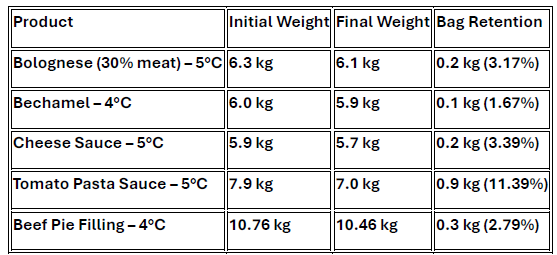
In recent trials involving chilled products with viscosities from 500Cp to 17,000Cp, our solution achieved a bag retention as low as 0.1 – 0.2 kg per bag, equating to less than 1.5% product loss in most cases.

Here’s a snapshot of our test results:

Screenshot 2025-06-04 125238

Engineered for Precision & Hygiene

Featuring integrated roller blade, the system ensures smooth product transfer with minimal manual effort. Its design supports chilled operations (4°C to 5°C), making it ideal for handling high-viscosity products like sauces, dairy-based mixtures, and pie fillings.

✅ Key Benefits:

  • Efficient removal of high-viscosity and chilled food products.
  • Reduces product wastage to less than 1.5% (product specific), ensuring maximum yield.
  • Roller blade technology for hygienic and thorough scraping.
  • Built with DC Norris’ renowned hygienic stainless-steel design.

Ready to Improve Your Production Efficiency?
The Manual Bag Emptier / Scraper is the smart choice for food processors looking to minimise waste and improve throughput.

To learn more about how our Manual Bag Emptier can benefit your business, or to request a demonstration, contact DC Norris today.


The post Product Spotlight: DC Norris Manual Bag Emptier – Proven Performance, Maximum Yield appeared first on DC Norris.
Read More

Preventative vs. Reactive Maintenance: Reducing Downtime in Food Processing

Minimising equipment failure is essential for maintaining efficiency and productivity in food processing. Breakdowns can lead to costly downtime, production losses, and compromised product quality. To mitigate these risks, food processors must adopt a robust maintenance strategy. The choice between preventative and reactive maintenance plays a crucial role in overall operational efficiency.

Understanding Preventative vs. Reactive Maintenance

Reactive maintenance (also known as “run-to-failure”) involves fixing equipment only when it breaks down. While this approach may seem cost-effective in the short term, it often results in unexpected downtime, higher repair costs, and increased safety risks.

Preventive maintenance, on the other hand, is a proactive strategy that involves routine inspections, servicing, and scheduled component replacements to prevent equipment failures before they occur. This approach helps manufacturers maintain consistent production flow, reduce downtime, and extend the lifespan of their industrial cooking equipment.

Key Benefits of Preventive Maintenance in Food Processing

1. Cost Efficiency

Investing in a preventative maintenance programme can significantly reduce long-term maintenance costs. Regular inspections help identify wear and tear early, allowing for minor repairs before they escalate into major failures. By preventing costly breakdowns, food processors can allocate their budgets more effectively and avoid emergency repairs that often come with inflated costs.

2. Extending Equipment Lifespan

Industrial cooking equipment is a major investment, and maximising its operational life is essential for cost-effectiveness. Routine maintenance – such as cleaning, lubrication, and part replacements – prevents excessive wear and tear, ensuring equipment runs efficiently for years to come. By following a structured maintenance plan, food processing plants can delay capital expenditures on new equipment.

3. Reducing Downtime

Unplanned downtime disrupts production schedules, leading to wasted ingredients, missed deadlines, and potential contract penalties. Preventative maintenance minimises the risk of unexpected breakdowns by keeping food processing equipment in optimal condition. Scheduled servicing can be planned around production cycles, ensuring minimal disruption and maintaining a steady output.

Implementing a Preventive Maintenance Strategy

To transition from reactive to preventative maintenance, food processors should:

  • Develop a routine inspection schedule for all food processing equipment.
  • Train maintenance teams to identify early warning signs of wear and tear.
  • Use data-driven insights, such as equipment performance monitoring, to predict potential failures.
  • Partner with equipment manufacturers like DC Norris to ensure best practices are followed for servicing and spare part management.

The Long-Term Impact of Preventive Maintenance

Preventive maintenance is a proactive approach that offers significant advantages over reactive maintenance in food processing. By reducing long-term costs, extending the lifespan of industrial cooking equipment, and minimising unexpected downtime, food manufacturers can ensure a more efficient and reliable production process. Implementing a structured maintenance plan today will lead to sustained operational success in the future.

For expert guidance on food processing equipment maintenance, contact DC Norris today.


V1-JDRGroup-DC Norris - CTAs -735 x 268 px-DD-14Jan2025-02


The post Preventative vs. Reactive Maintenance: Reducing Downtime in Food Processing appeared first on DC Norris.

Read More

DC Norris Group Expands with Acquisition of AE Mixers

Strengthening our Group. Supporting your growth

The DC Norris Group is pleased to announce the recent acquisition of AE Mixers, further strengthening its position as a global provider of high-performance processing solutions for the food, beverage, confectionery, and pet food industries.

This strategic acquisition builds on the Group’s earlier expansion, which saw Gilwood — specialists in stainless steel fabrication — join the Group. Together, these additions enhance the Group’s capabilities across a broader spectrum of the production journey: from initial factory planning and stainless steel fit-out, through to advanced cooking, mixing, cooling, and processing systems.

DC Norris and BCH have long been recognised for their world-leading food processing technologies. With the integration of Gilwood, the Group now offers a more complete service by supporting early-stage project planning and providing hygienic factory furniture, drainage systems, and bespoke stainless steel fabrication.

High Shear MixerThe addition of AE Mixers brings further depth, with a range of precision mixing systems for food, beverage, chemical, and cosmetic applications — including high shear, low shear, and vacuum configurations for both batch and continuous processing.


These acquisitions reflect the Group’s long-term vision: to offer a comprehensive, end-to-end solution for food manufacturers — from concept and factory layout to final product delivery.  By bringing together specialist expertise in engineering, fabrication, and automation, DC Norris Group is the go-to partner for complete food and confectionery manufacturing solutions worldwide.

“Our group-wide vision is simple: to empower manufacturers with the tools, technology, and expertise they need to build efficient, scalable, and high-performing processing operations,” said Annabel Norris, Director of Group Marketing at DC Norris.

“AE Mixers and Gilwood, alongside BCH, DCN North America and DC Norris, deliver the engineering and technical foundations that help bring ideas to life — from concept to high-quality finished product.”

More About the Group:

DC Norris Group comprises a network of specialist companies – including DC Norris, BCH, AE Mixers, Gilwood, and DC Norris North America – delivering best-in-class food and beverage processing systems to customers worldwide. With a focus on innovation, energy efficiency, and expert collaboration, the Group supports manufacturers across ready meals, beverages, sauces, soups, confectionery, wet pet food, and more.

DC Norris – Global Leaders in Cooking and Cooling Systems
With over 50 years of engineering innovation, DC Norris designs and manufactures advanced processing systems used globally in the production of ready meals, soups, sauces, beverages, and pet food. Innovations such as Jet Cook™ Technology, Braising Bar, and Cook-Chill Systems have helped manufacturers improve efficiency, product consistency, and energy performance.

DC Norris North America partners closely with customers across the United States — offering tailored support throughout the entire project lifecycle. Based in Michigan, the team provides sales, technical service, product development expertise and local manufacturing and assembly capabilities. This enables faster delivery times, responsive service, and solutions that are aligned with the specific needs of the North American market.

BCH – Food & Confectionery Processing Solutions

BCH offers systems for producing sauces, soups, ready meals, dips, dressings, jams and sweet savoury fillings using atmospheric, pressure and vacuum cooking methods, as well as vacuum cooling technology primarily for the food industry, 

In the confectionery sector they provide cooking, cooling, forming and extrusion systems for the manufacture of liquorice, starch gels, caramels and 100% fruit.

AE Mixers – Precision Mixing Technology

AE Mixers specialises in high-performance mixers for food, chemical, and cosmetic sectors. Their equipment supports a wide range of processes — from emulsions and creams to sauces and pastes — with custom solutions available for demanding or sensitive applications.

Gilwood – Process Plant & Hygienic Food Factory Solutions

With over 60 years of fabrication expertise, Gilwood manufactures pressure vessels, storage tanks, and hygienic stainless steel equipment including kerbing, drainage, and factory furniture. All products are built in-house using state-of-the-art machinery to meet the strictest hygiene standards in food and pharmaceutical production.

For further information please contact – annabelnorris@dcnorris.com

The post DC Norris Group Expands with Acquisition of AE Mixers appeared first on DC Norris.

Read More

Celebrating 10 Years of DC Norris North America: A Decade of Innovation, Partnership & Progress

1746640069487May 2025 marks a significant milestone for DC Norris North America—10 years of serving the U.S. and Canadian industrial food processing industry. What began as a vision to bring world-class food processing equipment to North America has evolved into a decade-long story of growth, resilience, and trusted partnerships.

From the very beginning, DC Norris North America has stood by its mission: to provide reliable, expert-driven processing solutions to some of the largest food brands in the region. Through supply chain challenges, labor shortages, regulatory changes, and even a global pandemic, the company has remained a steady partner—delivering critical expertise, service, and equipment that help keep production lines moving.

Built on Relationships, Driven by Results

In the past decade, DC Norris North America has completed more than 130 projects across North America, with a total value exceeding $40 million. These projects span a diverse range of food categories—including soups, sauces, ready meals, pet foods, and plant-based proteins. Each engagement has focused on delivering measurable improvements in efficiency, product quality, and food safety.

Perhaps the most telling sign of the company’s impact is the loyalty of its customer base: nearly one-third of projects come from returning clients. That level of trust speaks volumes about the company’s integrity, reliability, and deep industry expertise.

From a One-Person Operation to a Regional Leader

DC Norris North America’s journey began with just one employee—founder and President Dick Smith. With decades of international experience in food processing systems and a deep commitment to customer service, Smith launched the company with a laptop and a vision.

DC Norris“I started this business with a belief in what we could bring to the North American food industry,” said Smith. “Ten years later, it’s been incredible to see that belief become a reality. I’m proud of the team we’ve built and the clients we’ve helped grow.”

Today, the company operates from a 2,500-square-foot office and a 5,000-square-foot warehouse in Traverse City, Michigan. Its agile team includes three full-time staff and two part-time contractors. The warehouse is stocked daily with parts to ensure fast service and delivery across the continent—supporting customers when and where they need it most.

A Message from the Global Team

As a proud member of the DC Norris Group, the North American operation has played a critical role in the company’s global success. Managing Director David Norris reflected on the journey:

“DC Norris North America represents everything we value as a group—technical excellence, customer focus, and a passion for problem-solving. We’re incredibly proud of what Dick and the team have built over the past 10 years. Their work has not only expanded our global footprint but also strengthened our reputation for innovation and integrity in food processing solutions.”

Looking to the Future

As the company celebrates this 10-year milestone, it does so with gratitude—for its customers, team members, and industry partners who have played a role in its journey. But there’s no pause on progress. In fact, the company is preparing to announce new partnerships that will further expand its portfolio and capabilities.

As the food manufacturing landscape evolves, DC Norris North America is poised to lead the way—leveraging smarter automation, energy efficiency, and tailored engineering solutions to meet the industry’s emerging challenges.

The post Celebrating 10 Years of DC Norris North America: A Decade of Innovation, Partnership & Progress appeared first on DC Norris.

Read More

How Energy-Efficient Machinery Encourages Sustainable Food Manufacturing

As the food manufacturing industry continues to evolve, sustainability has become a key focus. Companies are under increasing pressure to reduce their environmental impact while maintaining cost-effective production. One of the most effective ways to achieve this is by investing in energy-efficient industrial cooking equipment and food processing machinery. By adopting modern, energy-conscious solutions, manufacturers can significantly lower their energy consumption, cut costs, and contribute to a greener future.

The Benefits of Energy-Efficient Machinery in Food Processing:

1. Reduced Energy Consumption

Modern food processing machinery is designed with energy efficiency in mind. Advanced steam cooking technology, energy-efficient motors, and optimised process controls help minimise energy wastage. By integrating these technologies, manufacturers can significantly reduce power consumption, making their operations more sustainable without compromising productivity.

2. Lower Operational Costs

Reducing energy consumption directly translates to lower utility bills. Although the initial investment in energy-efficient industrial cooking equipment may be higher, the long-term savings on electricity and fuel costs quickly justify the expenditure. Energy-efficient machinery not only reduces operating costs but also enhances profitability by lowering overhead expenses.

3. Minimised Environmental Impact

Food manufacturers are increasingly being held accountable for their carbon footprint. By consuming less energy, efficient food processing machinery helps reduce greenhouse gas emissions, aligning with global sustainability initiatives. Companies that prioritise energy efficiency can strengthen their commitment to environmental responsibility while meeting regulatory standards and customer expectations for sustainable practices.

4. Enhanced Process Optimisation

Energy-efficient machinery is often equipped with advanced monitoring and control systems that optimise food production processes. These technologies enable precise temperature regulation, automated energy adjustments, and real-time performance tracking. As a result, manufacturers can reduce resource waste, improve product consistency, and ensure higher-quality outputs while maintaining sustainability goals.

Embracing Energy Efficiency for a Sustainable Future

Transitioning to energy-efficient food processing machinery is a crucial step toward building a more sustainable food industry. By investing in modern technology, manufacturers can reduce their energy footprint, lower costs, and improve overall process efficiency. 

DC Norris is committed to providing cutting-edge, energy-efficient solutions that help food manufacturers achieve their sustainability targets without compromising on performance. For more information on how energy-efficient industrial cooking equipment can transform your operations, contact DC Norris today.


V1-JDRGroup-DC Norris - CTAs -735 x 268 px-DD-14Jan2025-02


The post How Energy-Efficient Machinery Encourages Sustainable Food Manufacturing appeared first on DC Norris.

Read More